Vita Mahjong Wood
- 4.9
- Rating
- 100.00K
- Installs
- Free
- Price

 Analysis by App-foxy
Vita Mahjong Wood is a board game built around one clear idea: matching wooden-style mahjong tiles in a calm, uncluttered puzzle format. I found that focus more important than any decorative detail because it determines the entire experience. You are not learning a complicated rule set or competing against a crowded multiplayer field; you are looking for available pairs, clearing the layout, and deciding whether to move quickly or think carefully.
That simplicity makes it easy to recommend to someone who wants a quiet game for short breaks. At the same time, it is not automatically the right choice for every puzzle fan. Players who need a large strategic system, a strong story, or constant novelty may find the format restrained. My experience is that its value comes from how smoothly it turns a familiar matching idea into a low-pressure routine.
Why the wooden-tile matching idea works so well
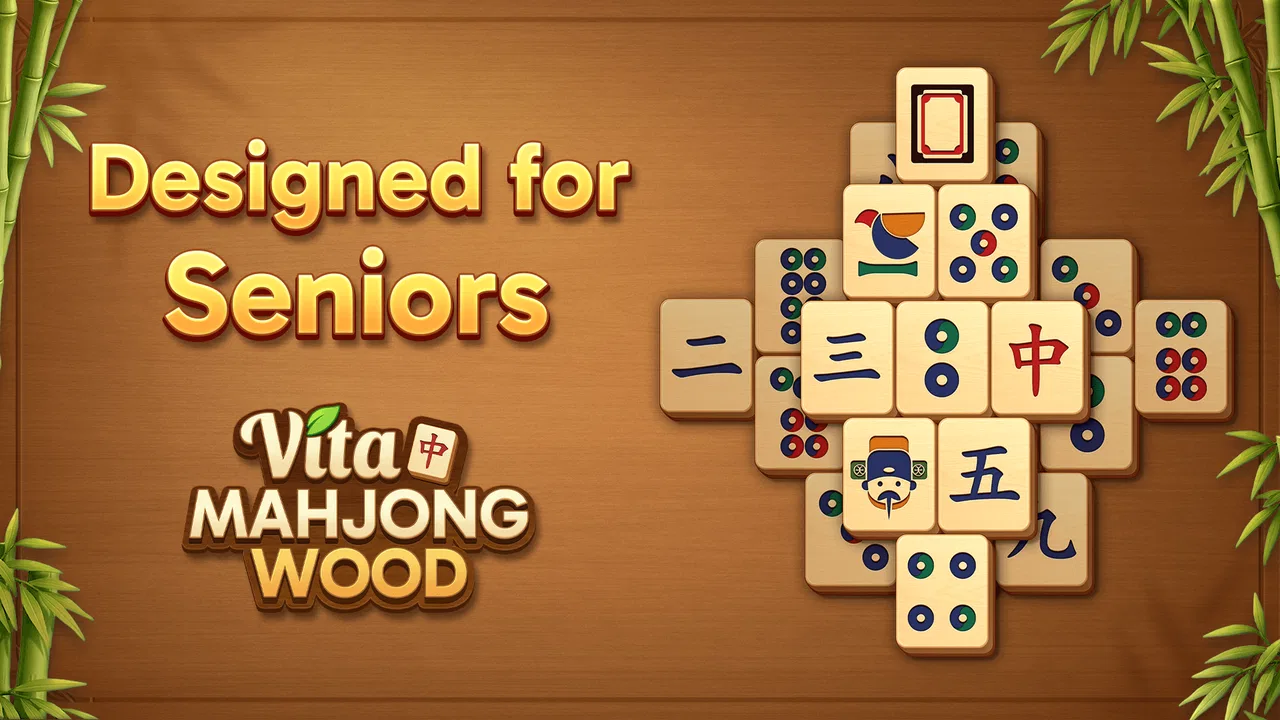
The central capability is the tile-matching board itself. Each round asks me to identify two matching tiles that can be selected, then continue until the arrangement is cleared. That sounds basic, but the visual presentation matters: the wooden theme gives the board a warmer, more tactile character than the bright, highly animated style used by many casual puzzle games.
You May Also Like

 Blood Strike: 2.5 Anniversary
Blood Strike’s Loadouts Turn Every Drop Into a Tactical Gamble
A close look at Blood Strike’s custom loadouts: how fast access to signature weapons reshapes its battle royale rhythm, rewards preparation, and narrows the gap between fights.

 Pandora - Music & Podcasts
Pandora’s Music Is Easy to Start, but Harder to Recover
Pandora’s strength is its low-effort path from a seed to a station. Its weak spot is how much confidence it asks you to place in connection, setup, and quiet recovery.

 8 Ball Pool
 Is Built on Rivalries, Rematches, and Routine
A close look at the rivalries, rematches, shared routines, and unanswered safety questions that turn a quick pool match into a persistent mobile community.

 Samsung Music
’s Quiet Strength Is Playing What You Already Own
Its reach comes less from spectacle than from dependable access to a personal library. That simplicity is both the app’s strongest retention engine and its ceiling.

 AccuWeather: Weather Radar
AccuWeather Review: A Quick, Clear Forecast for Everyday Decisions
For everyday plans, the best forecast is the one you can understand quickly. AccuWeather makes rain timing, radar, and local conditions easy to act on, with a few trade-offs.

 Hill Climb Racing
Why Hill Climb Racing Still Turns Crashes Into One More Run
A tiny car, a bumpy hill and one more upgrade: Hill Climb Racing keeps resurfacing because its simple chaos makes every near-miss feel personal.
More From Our News Desk



I especially liked that the game does not require me to remember a long chain of instructions. The main mental task is visual scanning. I look for exposed tiles, compare symbols, and choose whether taking an obvious pair now will make the remaining board easier or more awkward. Even when a board starts gently, the decision-making becomes more interesting as the visible choices narrow.
This is where Vita Mahjong Wood feels different from a simple matching exercise. The goal is not merely to spot identical pictures. Tile availability affects the order of play, so a pair that looks attractive may not be the most useful one to remove first. Clearing a top tile can reveal another option, while taking a pair too early can leave a less convenient arrangement underneath.
The wooden look also changes the mood. I found it less tiring than games that rely on flashing effects, loud transitions, or a constant stream of rewards. That does not mean the presentation will appeal to everyone. Some players prefer vivid colors because they make differences easier to recognize. Here, the calmer appearance can occasionally make a quick scan slower, especially when several symbols look similar at a glance.
What a normal round feels like
In practice, I begin by scanning the whole layout rather than tapping the first pair I notice. I check the upper and more exposed areas first, then consider which removal could open the most useful space. This small habit makes the game feel more deliberate without turning it into a demanding strategy title.
The best way to play is to keep two thoughts in mind at once: what can be matched now, and what the board may reveal after that match. A pair with no effect on the surrounding tiles is often less valuable than a pair that frees a blocked symbol. I would not call this deep planning, but it is enough to prevent every move from feeling automatic.
When I am tired, I switch to a simpler approach and take the clearest available matches. That is one of the game’s strengths. It supports both light attention and more careful observation, depending on how much energy I have. A short session can be a way to reset between tasks, while a longer session gives me room to improve my scanning habits.
The game’s free price makes this easy to test without committing to a purchase. It is also suitable for Everyone, which fits the straightforward board-game concept. I would still choose a different puzzle for a child who needs very large visual elements or a more guided learning structure, because tile recognition can become tiring when the screen is small.
A practical routine for better boards
My most useful technique is to avoid clearing pairs in a purely random order. First, I look for matches that are sitting above or beside other tiles and may expose new options. Second, I remember the location of a matching tile that is currently unavailable instead of repeatedly searching for it. Third, I pause after each important removal and rescan the board from the beginning.
That last step sounds inefficient, but it prevents tunnel vision. After a few matches, the layout changes enough that the best move may be somewhere I had already checked. A fast player who only follows the original visual pattern can miss newly exposed pairs. Taking a brief reset after a meaningful opening is often more effective than tapping continuously.
Another useful trade-off is deciding when not to chase a difficult match. If I spend too long searching for one symbol while several safe pairs are visible, the game stops feeling relaxing. I prefer to take the obvious options, then return to the harder area once the board has opened. This keeps the session moving and reduces the frustration that can come from treating every round like a perfect-score challenge.
These habits are not hidden systems or complicated techniques; they are ways to get more from the specific board design. The game rewards attention, but it does not demand that every move be optimized. That balance is why I see it as a casual puzzle first and a light visual strategy exercise second.
The best everyday use: a quiet pause between tasks
The strongest scenario for me is a short break when I want something interactive but do not want to start a large game. For example, after finishing a work call, I can play a few boards while having a drink, then stop without needing to remember a story, manage a team, or return to a complicated mission. The matching rule is familiar enough that I can begin immediately.
This also suits waiting rooms, public transport, or the final few minutes before bed, provided the player is comfortable focusing on a screen. The calm visual direction makes it less intrusive than an action game, and the board structure gives each session a clear beginning and end. I appreciate that sense of closure: completing a layout feels more satisfying than abandoning an endless stream halfway through.
It can work well for people who enjoy solitaire-style habits, traditional tile games, or visual sorting puzzles. Someone who likes arranging objects by color or finding patterns may understand the appeal quickly. The game is also approachable for a player who has never tried a mahjong-inspired puzzle, because the basic interaction is easier to grasp than the full rules of traditional mahjong.
That distinction matters. This is not a replacement for playing mahjong with other people, and I would not choose it when I want the social tension of a table game. It is better understood as a solo matching interpretation that borrows the recognizable tile language while keeping the activity focused on clearing a board.
Where the experience can lose momentum
The same focus that makes the game accessible can also limit it. If you expect a campaign with memorable characters, a developing narrative, or a broad collection of radically different mechanics, this will probably feel too narrow. Its pleasure comes from refining the same basic activity rather than constantly changing the rules.
Repetition is another consideration. Matching tiles can be relaxing for a while, but the effect depends strongly on personal taste. I can play it when I want a steady rhythm, yet I would not use it as my only puzzle game. After a longer session, I may want a word game, a logic grid, or a more demanding spatial challenge to exercise a different kind of thinking.
The wooden presentation is attractive, but it may not be ideal for every screen or lighting condition. On a small display, similar tile designs can take longer to separate visually. I found that increasing attention rather than tapping faster helped, but players with visual strain may prefer a puzzle with higher contrast and larger symbols.
There is also a subtle difference between relaxing play and effortless play. The game is gentle in concept, but a crowded arrangement can still require patience. If I am distracted, I make mistakes simply because I have not inspected the available tiles properly. That is not a flaw in the matching idea, but it means the app is less suitable when I need something I can play with almost no concentration.
Players should also keep expectations realistic about the free format. The game costs nothing to start, which is convenient, but the main reason to continue is enjoyment of the board-clearing loop itself. Anyone looking for a large progression system should first decide whether repeated matching is enough to hold their interest. I would rather be clear about that than pretend the simple concept offers the depth of a full strategy game.
How it compares with familiar alternatives
Compared with traditional mahjong, this is much easier to pick up because it does not ask me to learn a complete table-game rule set. Traditional play involves opponents, turns, scoring, and a richer structure. Vita Mahjong Wood removes that complexity and turns the tiles into a solo visual puzzle. That makes it more convenient for casual use, but less satisfying for anyone seeking authentic competitive mahjong.
Compared with match-three games, the rhythm is slower and more observational. Match-three titles often emphasize quick reactions, cascading effects, and colorful chain reactions. Here, I spend more time examining the board before choosing a pair. The trade-off is that the experience feels calmer, though players who enjoy constant movement may find it subdued.
Compared with solitaire, the similarity is in the quiet, self-contained nature of the session rather than the rules. Solitaire asks me to manage cards through a sequence of placements, while this game asks me to recognize and expose matching tiles. I prefer the tile format when I want a more visual task and less concern about card order.
Compared with modern logic puzzles, it is less demanding but more immediately accessible. A difficult logic game may offer greater intellectual variety, yet it can require sustained concentration and a willingness to restart. This title is better when I want a modest challenge that does not punish me for playing casually.
Who will get the most from it
The ideal player is someone who enjoys visual matching, traditional tile imagery, and short solo sessions. It is particularly well suited to people who want a board game they can understand quickly, without a tutorial-heavy introduction. The free entry point also makes it a sensible choice for testing whether this style of puzzle fits your routine.
I would recommend it to a friend who says, “I want something relaxing, but I still want to make decisions.” The game gives enough room for scanning and planning to avoid being completely passive. It is also a good option for players who prefer a quieter interface to the energetic style common in casual mobile games.
I would skip it if you need competitive play, a story, deep character progression, or a constantly changing set of mechanics. I would also look elsewhere if your main goal is traditional mahjong rather than a tile-matching adaptation. A dedicated strategy or logic game will be a better choice when you want a more demanding mental workout.
Vita Studio has kept the concept focused, and that focus is both its appeal and its boundary. The game does not need a complicated explanation to become enjoyable, but it also cannot hide the fact that its core activity remains consistent from session to session. For me, that is acceptable because the intended use is clear: open it, settle into the board, make a few thoughtful matches, and leave feeling that I used a short break well.
My recommendation after spending time with it
With a 4.9 average from around twelve thousand ratings, the game has clearly connected with many players, and I can understand why. Its appeal is easy to feel within the first session: the board is approachable, the wooden theme is calm, and the matching task provides just enough attention to keep a break from becoming passive scrolling.
The current version is 1.2.0, and it runs on Android 7.0 or later. It has passed one hundred thousand installs, which places it comfortably among games people are willing to try for a quick puzzle routine. Those figures do not change my personal assessment, but they do show that this is not an obscure experiment with no audience.
My final view is positive, with a clear condition: choose it for its focused tile-matching experience, not for features it was never designed to provide. The real strength is its ability to turn a familiar board idea into a calm, repeatable pause. If that sounds like the kind of game you want beside your other apps, I think it is worth trying. If you need variety, competition, or a deeper strategy layer, keep it as a casual extra rather than your main puzzle game.
FAQs for Vita Mahjong Wood
01What is Vita Mahjong Wood, and how does it differ from traditional Mahjong games?
Vita Mahjong Wood is a digital version of the classic tile-matching game, designed with a unique wooden aesthetic that provides a calming and visually pleasing experience. Unlike traditional Mahjong, which is played with four players and involves strategy and skill, Vita Mahjong focuses on solo play, emphasizing puzzle-solving and relaxation.
02Can Vita Mahjong Wood be played offline, and what are the system requirements?
Yes, Vita Mahjong Wood can be played offline, making it a great option for users who want to enjoy the game without an internet connection. The app is lightweight and compatible with most Android and iOS devices, requiring minimal storage space and processing power, ensuring smooth gameplay on older devices as well.
03Are there in-app purchases or ads in Vita Mahjong Wood?
Vita Mahjong Wood offers a freemium model, meaning it is free to download but includes in-app purchases. These purchases may offer additional tile sets, themes, or hints. While the game does include ads, they are non-intrusive, and users can opt to remove them through a one-time purchase, enhancing the gaming experience.
04What features make Vita Mahjong Wood engaging for players?
Vita Mahjong Wood includes several features to keep players engaged, such as daily challenges, a variety of tile patterns, and customizable backgrounds. The game also offers a hint system for beginners and timed modes for advanced players looking for a challenge, catering to a wide range of skill levels and preferences.
05Is Vita Mahjong Wood suitable for all ages, and how does it support brain health?
Vita Mahjong Wood is suitable for all ages, providing an easy-to-understand interface and adjustable difficulty levels. Playing Mahjong is known to support cognitive health by improving memory, concentration, and problem-solving skills. The relaxing gameplay and soothing soundtrack further enhance its appeal as a beneficial brain exercise for players of any age.
Pros
- Beautiful wood-themed graphics
- Smooth and responsive controls
- Variety of challenging levels
- Relaxing ambient music
- Offline play available
Cons
- Limited customization options
- Occasional ads interrupt gameplay
- No daily challenges
- Lacks multiplayer mode
- Progress sync issues across devices

Vita Mahjong Wood
Gallery